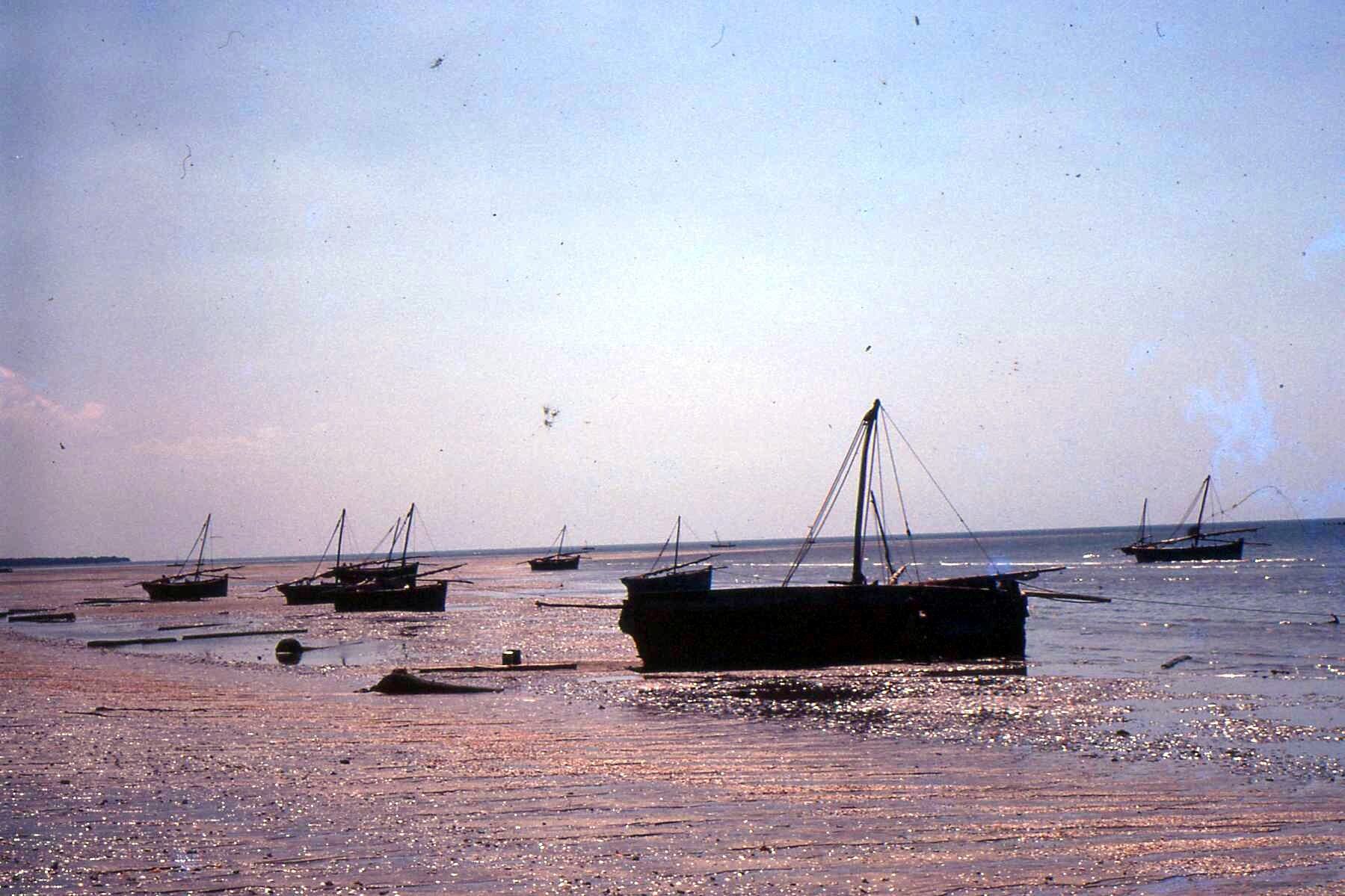
The old port
c. 800 – 1916
Long before anyone drew a container terminal here, this shore was the busiest harbour on the central East African coast.
Kaole
The first port was not Bagamoyo but Kaole, five kilometres down the coast, settled around the 8th century as a trading town. Mangrove poles, sandalwood, ebony and ivory went out; by the 13th century it was important enough to build in stone.
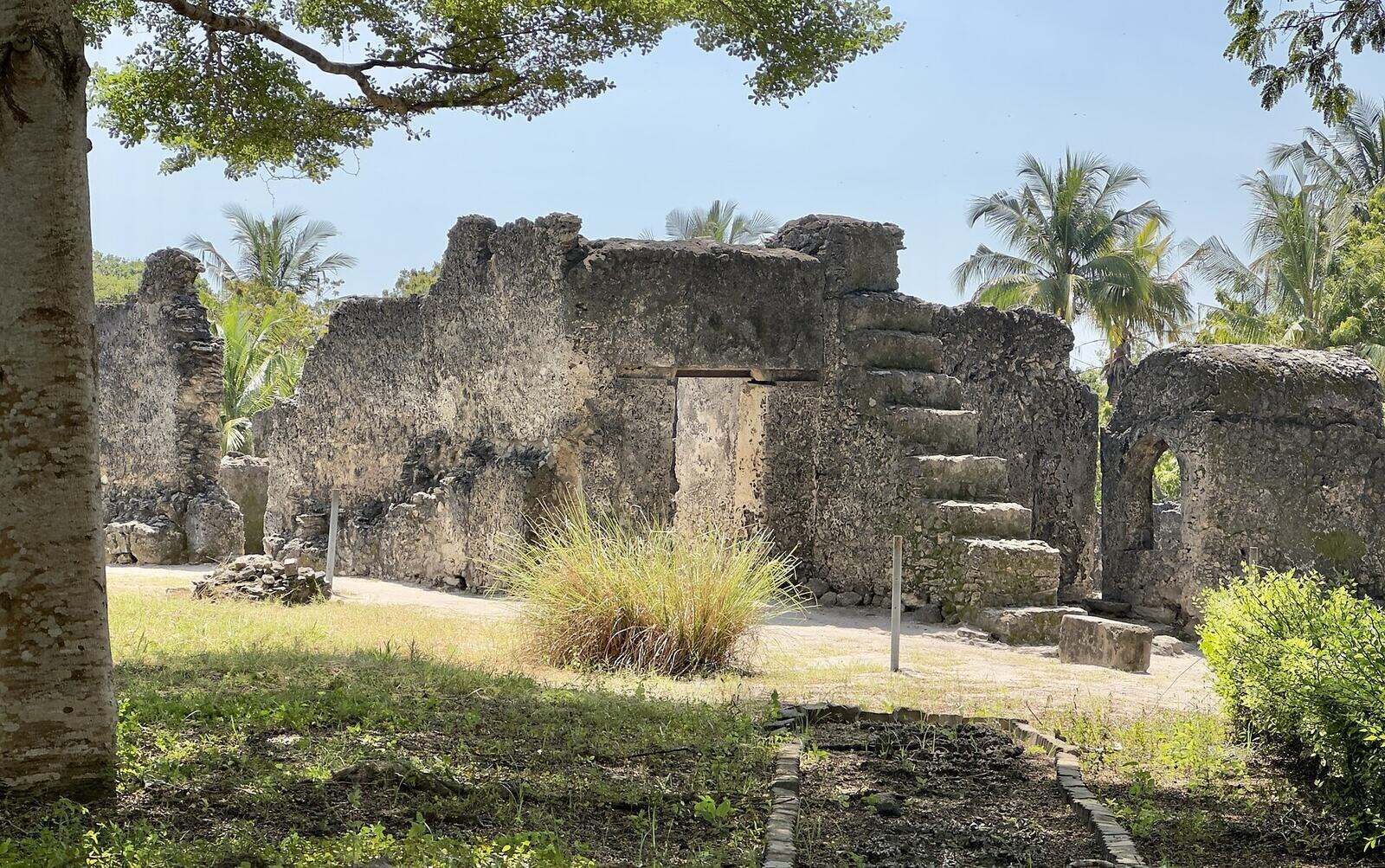
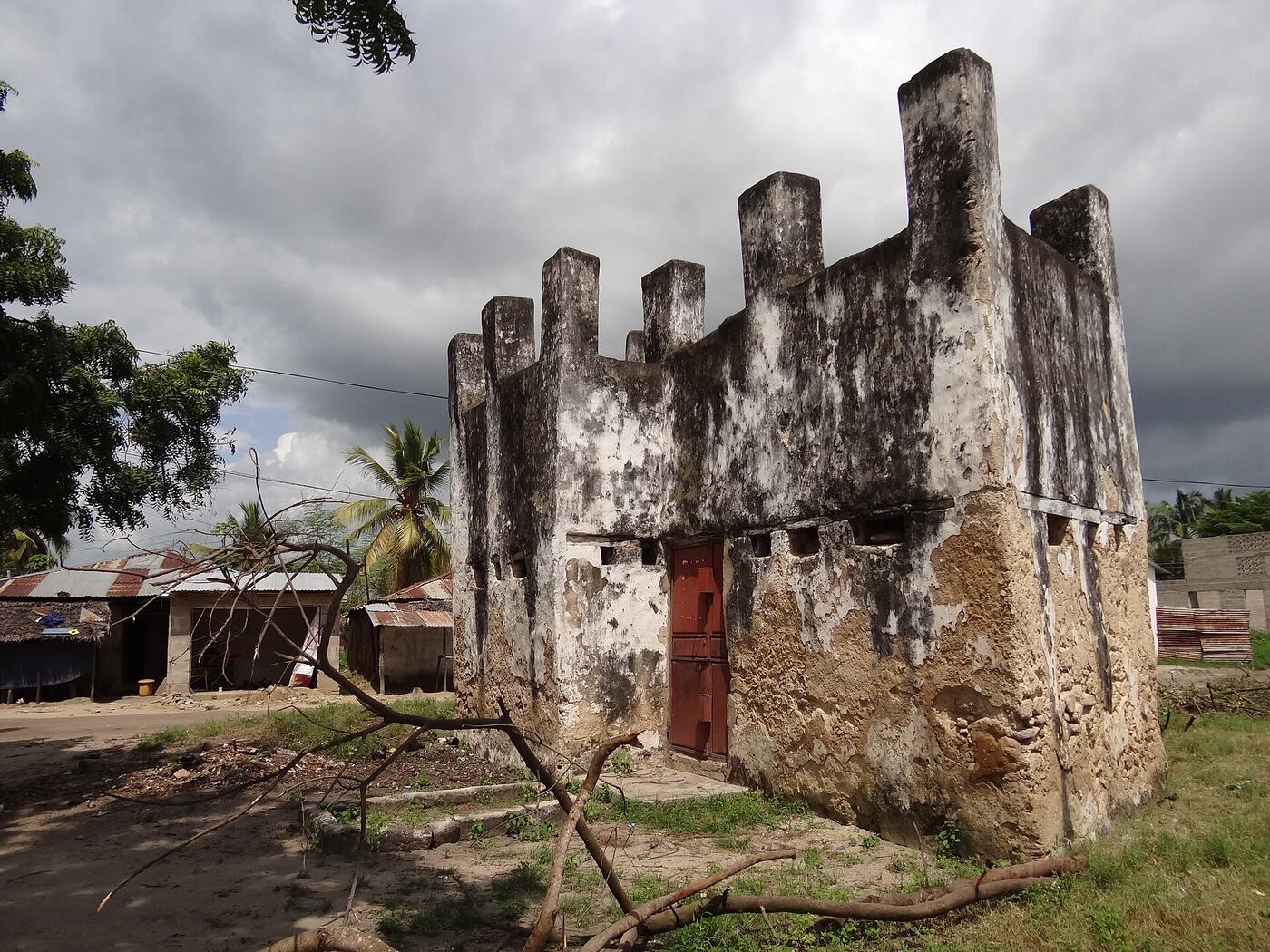
What survives are two mosques and about thirty tombs of coral stone, some marked with pillars. Local tradition holds that several are the graves of the diwanis, the town’s rulers. Chinese ceramics found among them show how far its trade reached. The houses were of wood and are gone. The site was first studied by the archaeologist Neville Chittick around 1958.
The caravan road
Until the 18th century Bagamoyo itself was a village of fishermen and farmers trading fish, salt and gum. Then Oman made Zanzibar the market of the western Indian Ocean, and the nearest point on the mainland became the place where the interior met the sea.
By the mid-19th century it was the most important entrepôt on this stretch of coast. Every year thousands of porters, most of them Nyamwezi, walked in from as far as Lake Tanganyika with ivory, gum copal and rubber, and walked back with cloth, guns and copper wire. Many stayed three or four months.
Be happy, my soul, surrender all worry — soon the place of your desires will be reached, the town of palms, Bagamoyo.Nyamwezi porters’ marching song, as recorded by the German district officer August Leue in the late 19th century
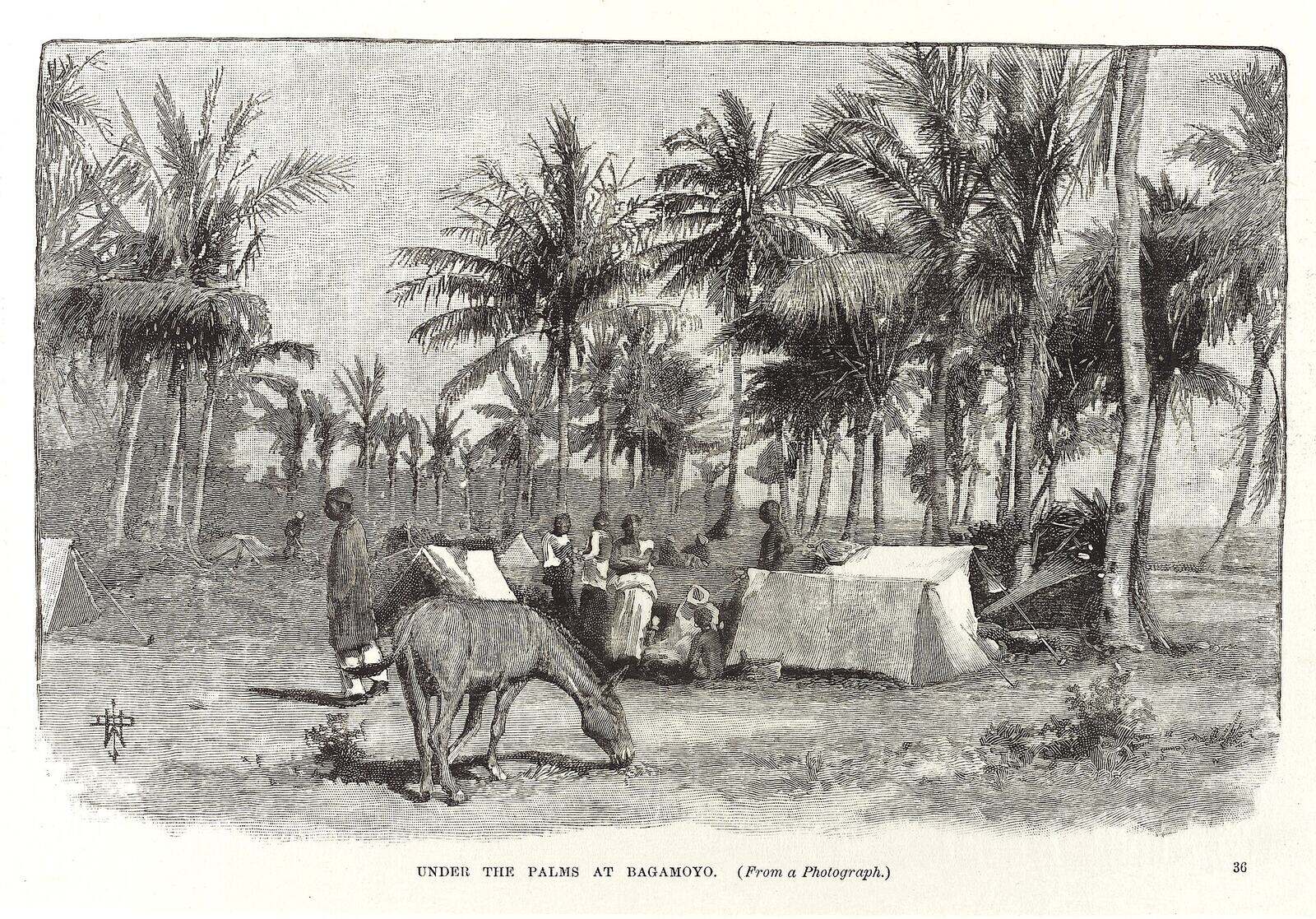
Enslaved people passed through too, on the way to Zanzibar’s market, and that history is central to how the town remembers itself. How large the trade was here is disputed: archival work suggests ivory was the main export, that many porters were free wage labourers, and that Kilwa, far to the south, was the coast’s principal slave port. The foreign slave trade was prohibited in 1873 and continued in secret to the end of the century.
The same road ran the other way for Europeans. Burton, Speke, Grant and Stanley all set out for the interior from Bagamoyo. Livingstone never came here alive: in 1874 his body was laid in the tower of the mission church to wait for the tide to Zanzibar.
The mission
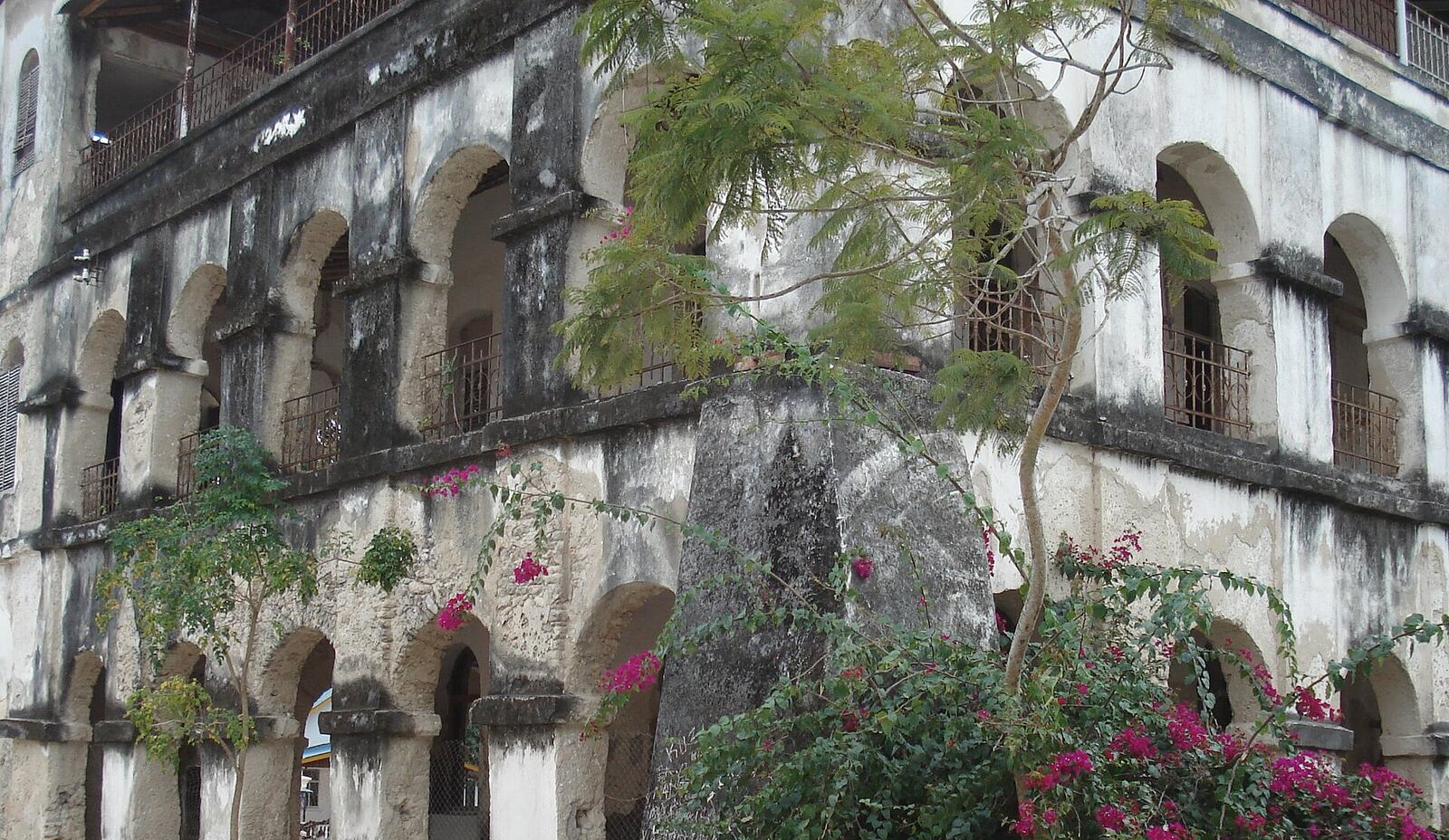
In 1868 the town’s local rulers, the majumbe, gave the Catholic Fathers of the Holy Ghost land north of the town: the first mission in East Africa. It was meant to house children freed from slavery, and grew into a church, a school, workshops and farms. Its museum covers slavery, the mission and the town.
Capital, then backwater
The German East Africa Company, and then the imperial government, ran the colony from Bagamoyo. It did not last. In 1891 the capital moved to Dar es Salaam, and when the railway inland was started from there in 1905, the caravan road had no reason left to exist.
The last time the old port mattered to anyone’s strategy was August 1916. The Royal Navy shelled the town, then landed sailors, marines and Zanzibar Rifles on the 15th. The German garrison had mounted a 105 mm gun salvaged from the cruiser Königsberg on the hill to the south; it could not be lowered far enough to hit the boats close inshore.
The port announced in 2013See what is left: visiting Bagamoyo
Sources: Wikipedia, “Bagamoyo”, “Bagamoyo Historic Town” and “Kaole” (CC BY-SA 4.0), read 1 October 2026, and the references they cite. Sources disagree on when the capital years began (1885, 1886 or 1888); all agree the move to Dar es Salaam was in 1891.