A day, or three
Visiting Bagamoyo
An old town you can walk end to end, medieval ruins a short ride south, and a beach where dhows are still loaded by hand.
Before you go
Small, slow, and worn
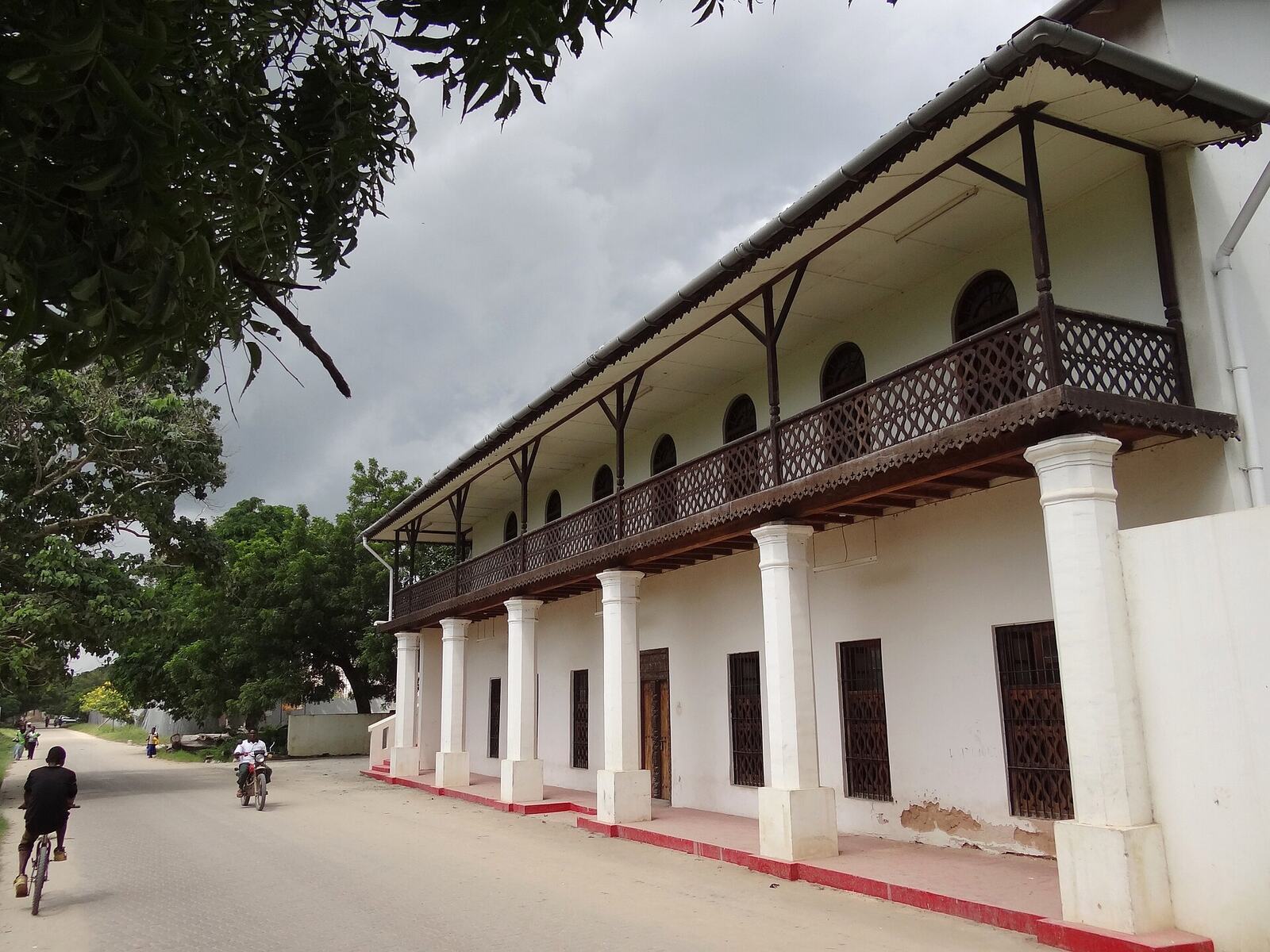
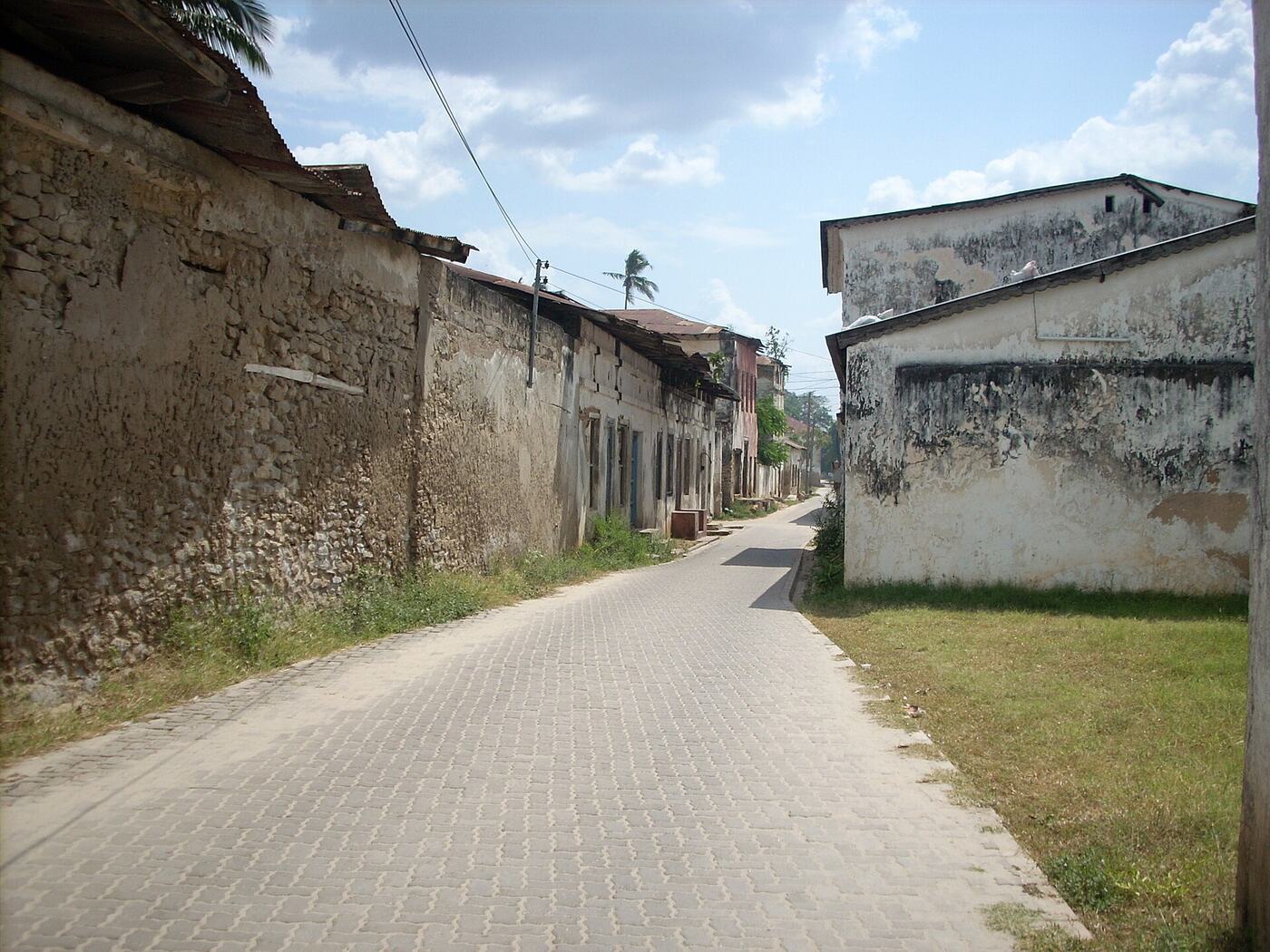
Bagamoyo is not restored. Much of the German and Arab architecture is slowly falling apart, and is often beautiful for it. The town is compact enough to see on foot, with an active art scene around the national arts college.
Most visitors come for a day from Dar es Salaam. Staying a night or two leaves time for Kaole, the mission and the beach to the north.
In the old town
- The doors and façadesCarved portals with Arabic patterns on the merchants’ houses, and the ageing German buildings between them. Go in daylight.Free
- Fortress and slave prisonThe old fort, where captives were held before the crossing.TSh 10,000
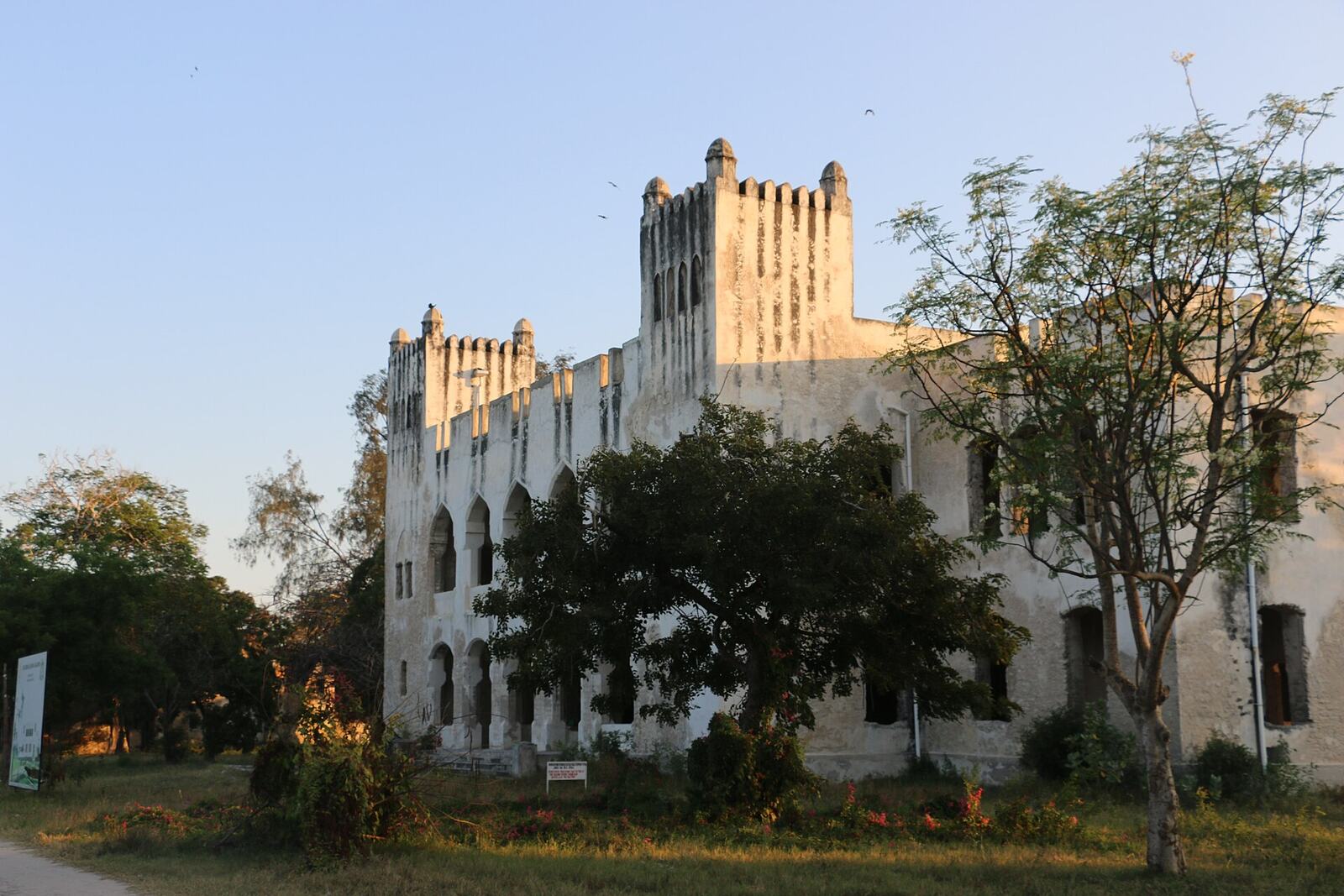
- The German BomaColonial headquarters from the capital years. Explorers’ caravans for the interior left from the gate outside.—
- Dhow harbour and fish marketThe busy end of the beach: boats loaded on the sand, the catch sold behind.Free
- Holy Ghost Mission and museumNorth of town, along an avenue of trees. Three rooms: slavery, the mission, the town. Livingstone’s body rested here before it was shipped to Zanzibar.TSh 10,000
- College of ArtsTanzania’s leading arts college. Exhibitions, rehearsals you can often watch, and the town’s annual festival.—
- Art marketIn the old market. Much of the painting sold across the country is made here, and it is cheaper at the source. Bargain.—
Out to Kaole
Five kilometres south along an unsealed coast road, behind Kaole village, are the ruins the town grew out of: two coral-stone mosques and about thirty tombs, some with stone pillars, from the 13th to 16th centuries.
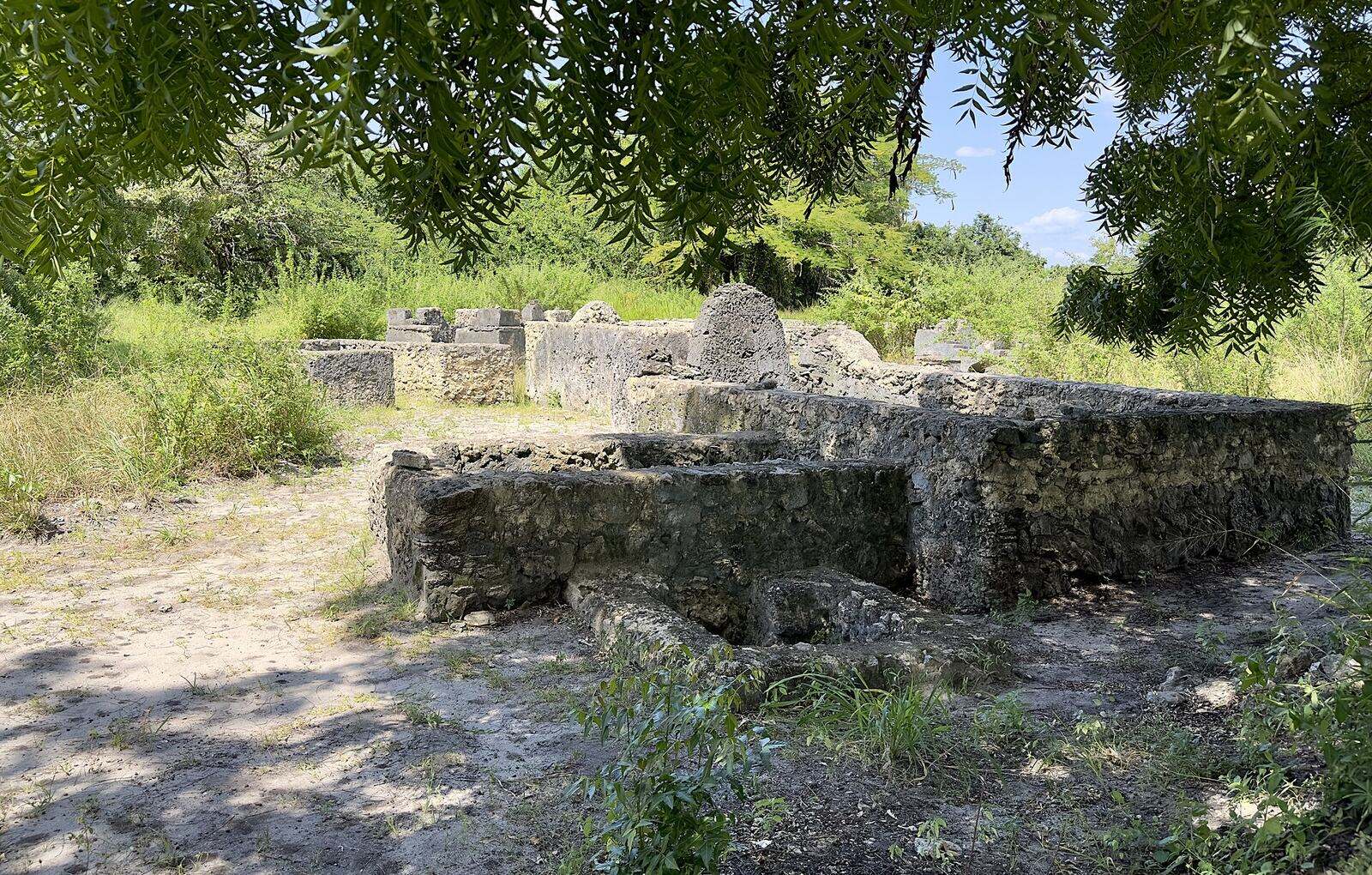
- Kaole ruins and museumThe small museum shows what was found on site, including Chinese ceramics — evidence of how far the trade reached.TSh 10,000
- Crocodile farmOn the road to Kaole, shortly before the village.c. TSh 5,000
- Salt pans and mangrovesNorth of town at the end of the coast road. Don’t walk the empty stretches of beach alone.Free
A rented bicycle is the easy way to do it (about TSh 2,000 a day; check the brakes). A bajaji will take you for a few thousand shillings.
Where to eat
Local food — rice, ugali or pilau with meat and sauce — is everywhere and costs from about TSh 1,500. For anything else the choice is short.
- Poa PoaNear the dhow harbour, signposted all over town. Quiet, a wide menu, milkshakes and beer.from TSh 7,500
- D’zRoadside, cheap, with a bit more than the standard menu. The stall behind it is a local favourite for chipsi mayai.from TSh 4,000
- Samiha’sLocal eatery: rice, sauce, some meat. Sometimes very good fresh juice.from TSh 3,000
- New Top Life InnCentral and very cheap. Chicken, chips, omelettes — and a loud television.—
- Millennium Old Post Office HotelAsk to go up to the roof for the view over the harbour and fish market. Buying a drink is expected.from TSh 2,000
Where to stay
- Kiromo Guest HouseBudget. Very clean and quiet.double TSh 15,000
- Pop Juice ResthouseBudget, and noisy. Jangombe Resthouse across the road is similar.double TSh 9,000
- Mary’s Nice PlaceMid-range. A calm lodge with a garden, near the beach, fifteen minutes’ walk from the centre. Breakfast included.double from TSh 35,000
- Millennium HotelThe best of the beach resorts, on the ocean next to the College of Arts. Others line the coast north of town; most have pools.—
About these listings. Names, descriptions and prices on this page come from the Wikivoyage guide to Bagamoyo and are not checked on the ground by this site. Prices in a town like this move; treat them as an order of magnitude and confirm before you travel. Nothing here is sponsored.
From Dar es Salaam
There is no direct bus. Take a daladala from Makumbusho to Bunju Sokoni, then a second one to Bagamoyo. Allow more time in the evening rush towards Dar. In town, a bajaji starts at about TSh 1,500 and a taxi at TSh 3,000.
Dhows cross to Zanzibar and locals use them, but boats have sunk on the crossing. Take the ferry from Dar es Salaam instead.
Safety. The town is generally fine by day. Avoid walking at night, keep an eye on your things in restaurants, and don’t walk the empty beach or mangroves alone.
Source for this page: Wikivoyage, “Bagamoyo”, CC BY-SA 4.0, read 1 October 2026; and Wikipedia, “Kaole”.